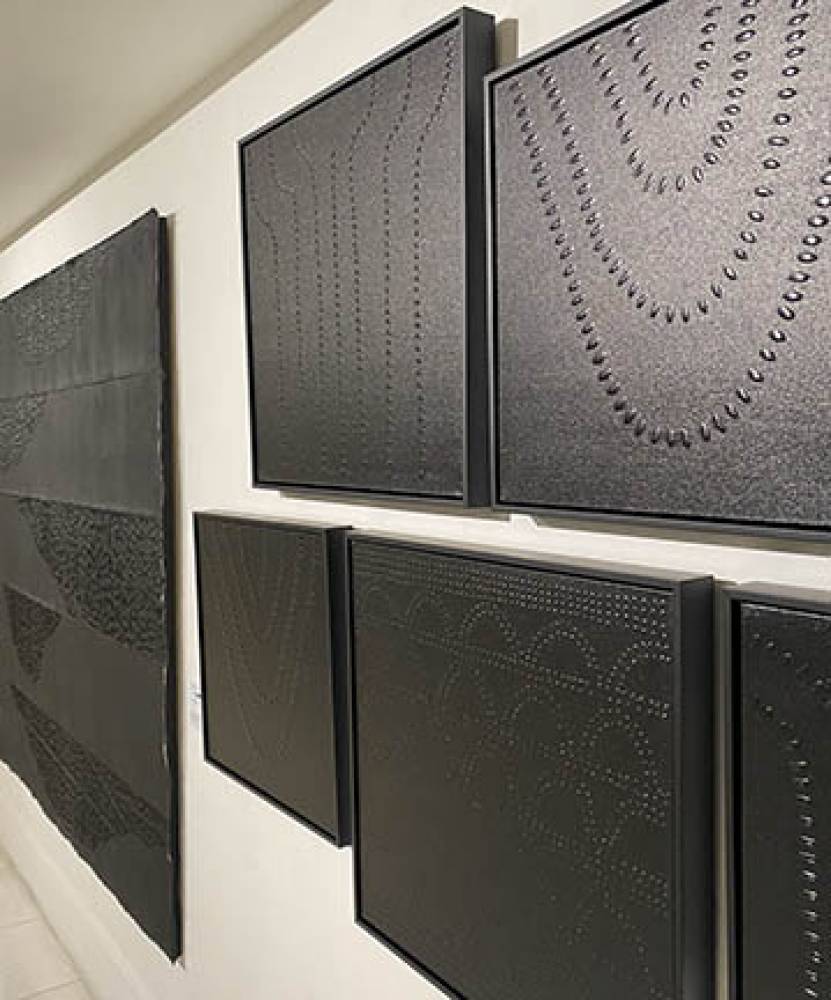


Honoring Tribal Markings in Art: The Vision of Cleotha Bell
Tribal markings in art represent a bridge between identity, culture, and creative expression. Cleotha Bell, born in Vicksburg, Mississippi in 1975, brings these sacred traditions into the realm of contemporary art through expressive and vibrant canvases. After studying interior architecture and design at Milan’s Instituto Europeo di Design, he developed a deep fascination with art history—particularly the beauty and meaning of African cultures. Inspired by the symbolic language of tribal markings, he dedicated his practice to exploring these visual expressions of belonging and memory in depth.
The Journey from Milan to Miami
Following his studies in Milan, Bell relocated to Miami, Florida, where he fully committed himself to painting. Through his relocation, he discovered that tribal markings in art extend far beyond decorative body design. They embody legacies of ancestry, resilience, and connection.
To ground his work in authenticity, Bell immersed himself in research. Tribes such as the Bétamarribé, Ko, Nanumbas, Dagombas, Frafras, Nuer, Bodi, Mursi, and Karamojong became central to his inspiration, shaping the visual rhythm and pattern language in his work.
(Explore related article: Incorporating Global Art into Interior Design)


Symbolism and Significance of Tribal Markings
In many African cultures, tribal markings symbolize far more than aesthetics. They serve as emblems of beauty, fertility, adulthood, bravery, and ethnic identity. Bell’s paintings reimagine these traditions on canvas, translating them into modern compositions layered with texture and movement.
Through this reinterpretation, Bell transforms intricate cultural motifs into contemporary forms—honoring the past while engaging the present. His art demonstrates how tribal markings in contemporary art can preserve cultural memory while creating new pathways for connection across generations.
Creating Dialogue through Art
Above all, Bell approaches his role as an artist with humility, viewing himself as an interpreter rather than a narrator. Through vibrant color palettes and tactile surfaces, he encourages viewers to engage with cultural heritage in a new light.
Ultimately, his paintings invite dialogue about the importance of preserving tribal markings in art, ensuring that these visual expressions of identity and belonging remain visible in a rapidly modernizing world.