
Victor Matthews Contemporary Art: The Light of Sand and Line
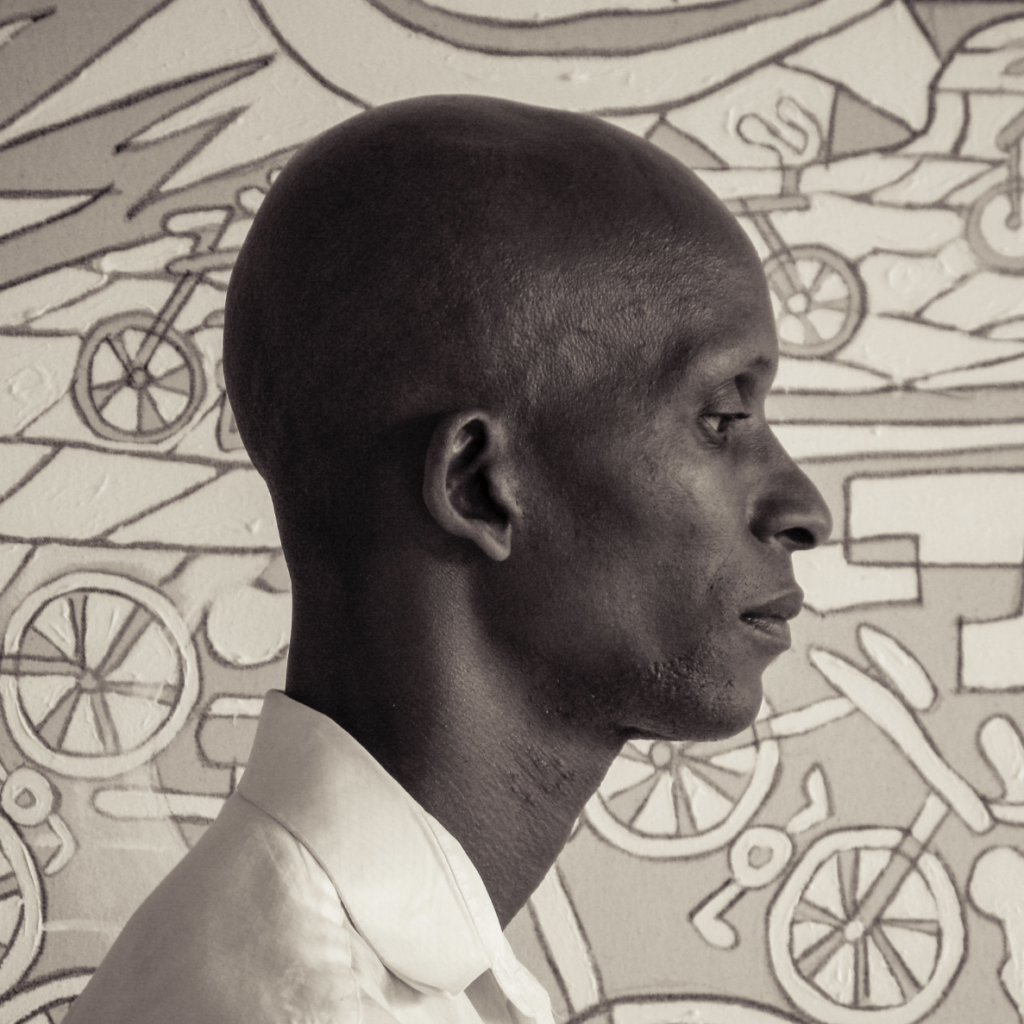
Victor Matthews’ work brings gesture, rhythm, and material together in a luminous and unmistakable visual language. Born in 1963 in Crown Heights, Brooklyn, he began drawing as a child. His mother encouraged his creativity by dedicating an entire room in their home as his studio. That early support eventually led him to New York’s High School of Art and Design. There, his artistic path became both clear and enduring.
Throughout the 1980s and 90s, Matthews moved within a vital New York art scene. He worked alongside friends and contemporaries such as Keith Haring, Jean-Michel Basquiat, Donald Baechler, and Ouattara Watts. At the same time, he learned under lifelong mentors Francesco Clemente and Brice Marden. From this period emerged his hybrid approach. It combines traditional studio painting with street art techniques and a strong sense of line and surface.
From Crown Heights to a Singular Visual Language
Victor Matthews is an African American artist and sculptor whose work has grown in close dialogue with his life. Observers have described him as both calm and vividly present within New York’s intense rhythm. His slower pace makes room for seeing shadows, people, and architecture with unusual clarity. In turn, this quiet presence finds its echo in his paintings. The works often appear serene at first glance yet reveal intricate internal motion.
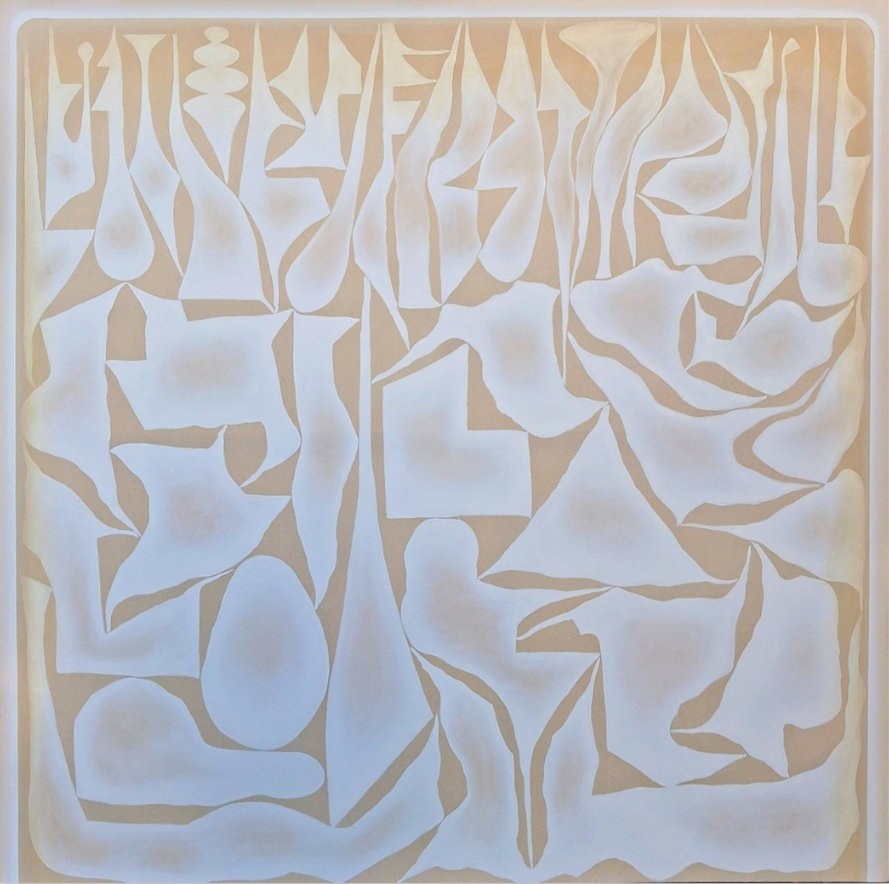
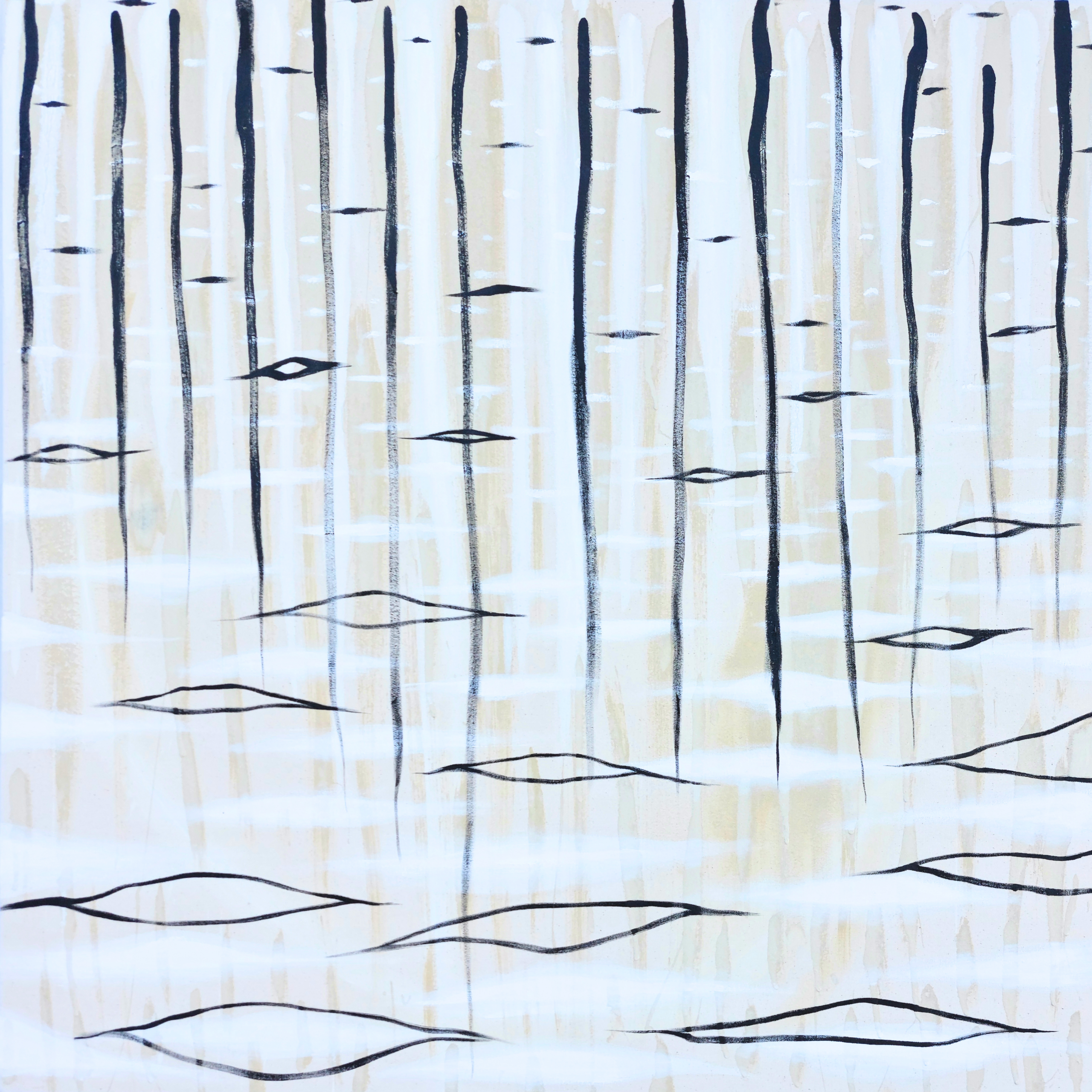
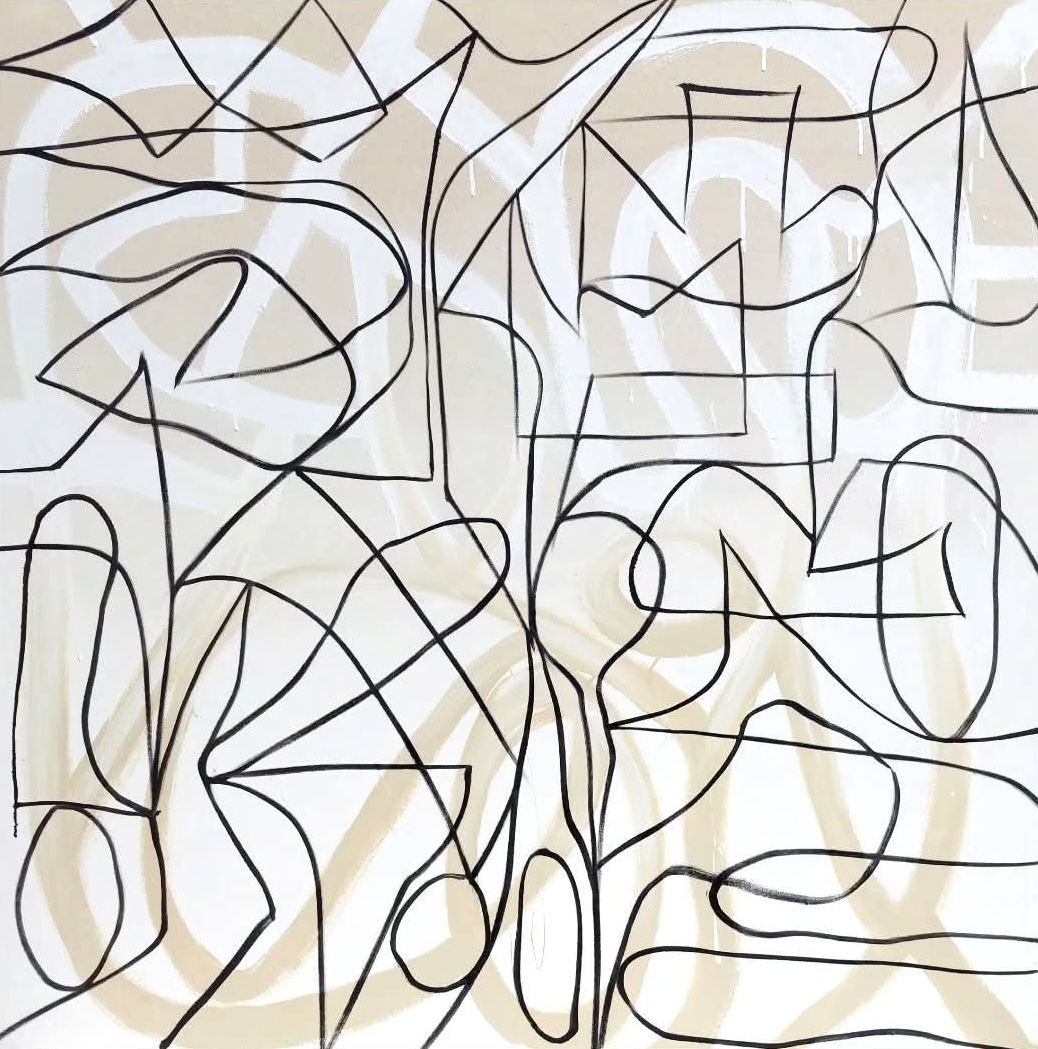
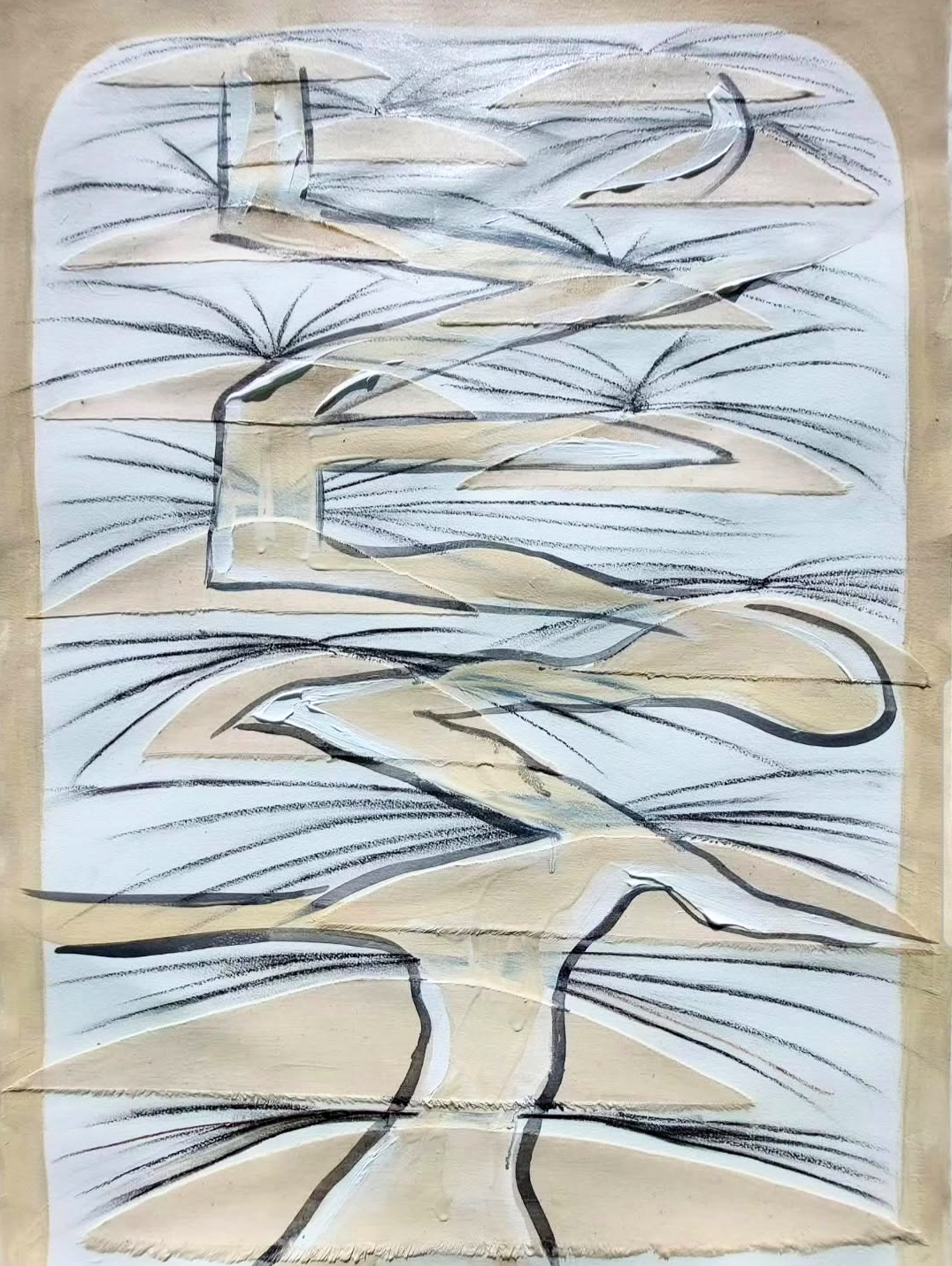
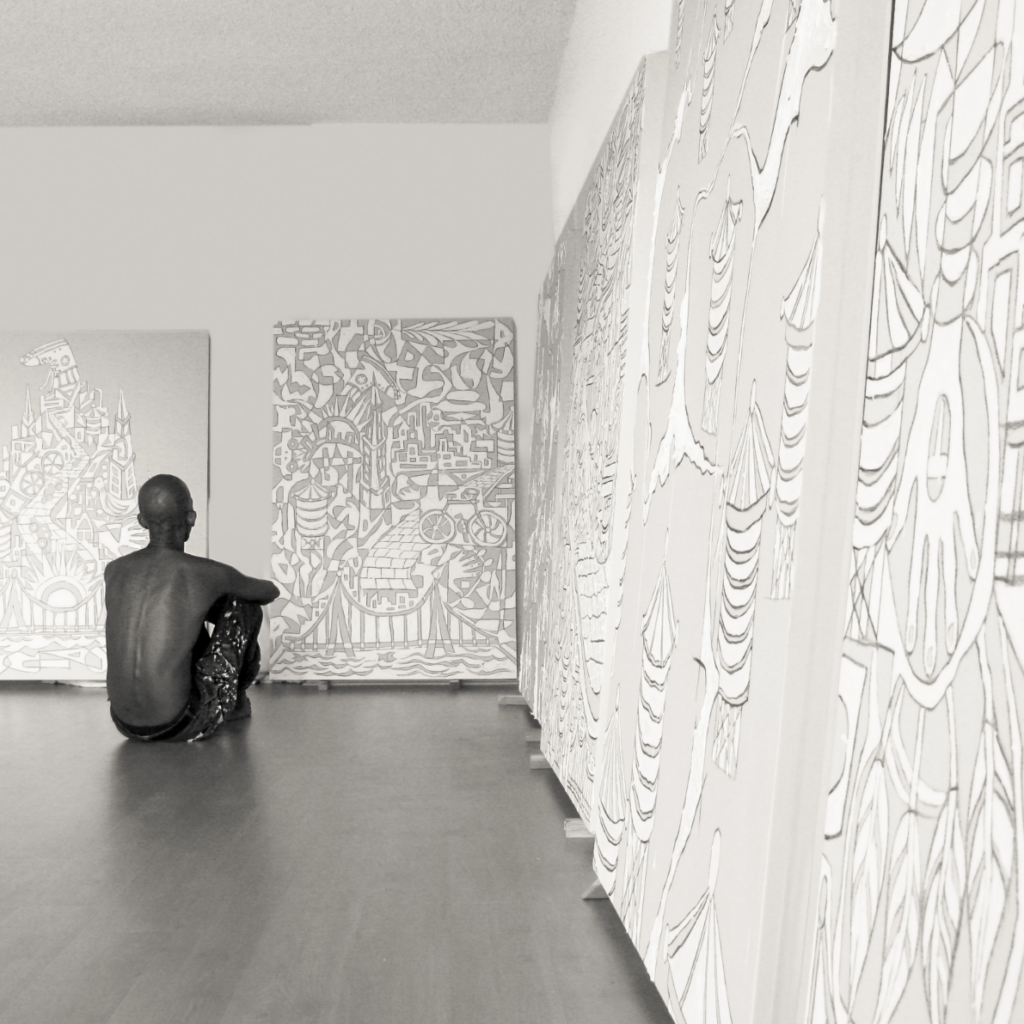
Over time, Matthews developed a signature body of work, including his well-known white paintings on raw linen. These compositions rely on a restrained palette and hand-drawn line. The result is imagery that feels pure and open, with no noise or distraction from the surface itself. Although visually complex, the works remain orderly. Shapes move across each composition in a steady rhythm that holds both energy and stillness.
Line, Rhythm, and Monochrome Abstraction
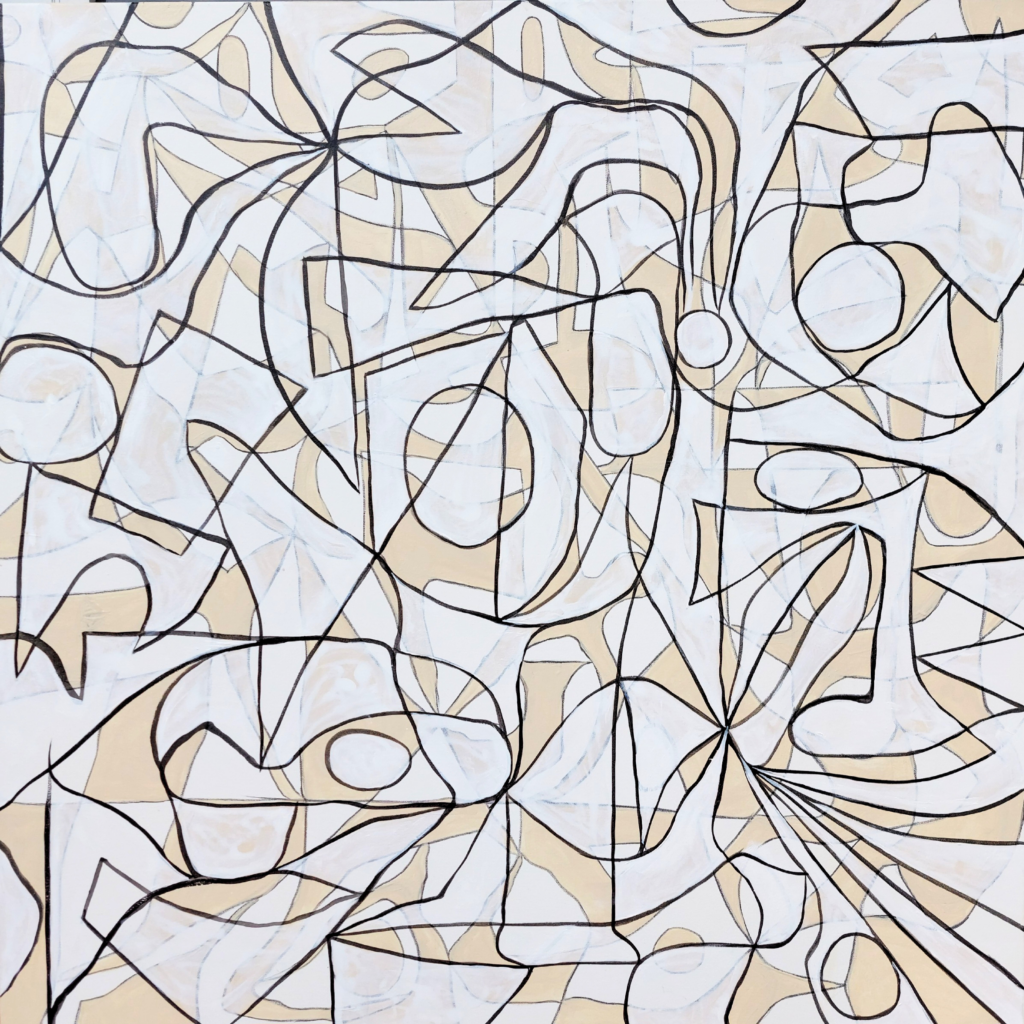
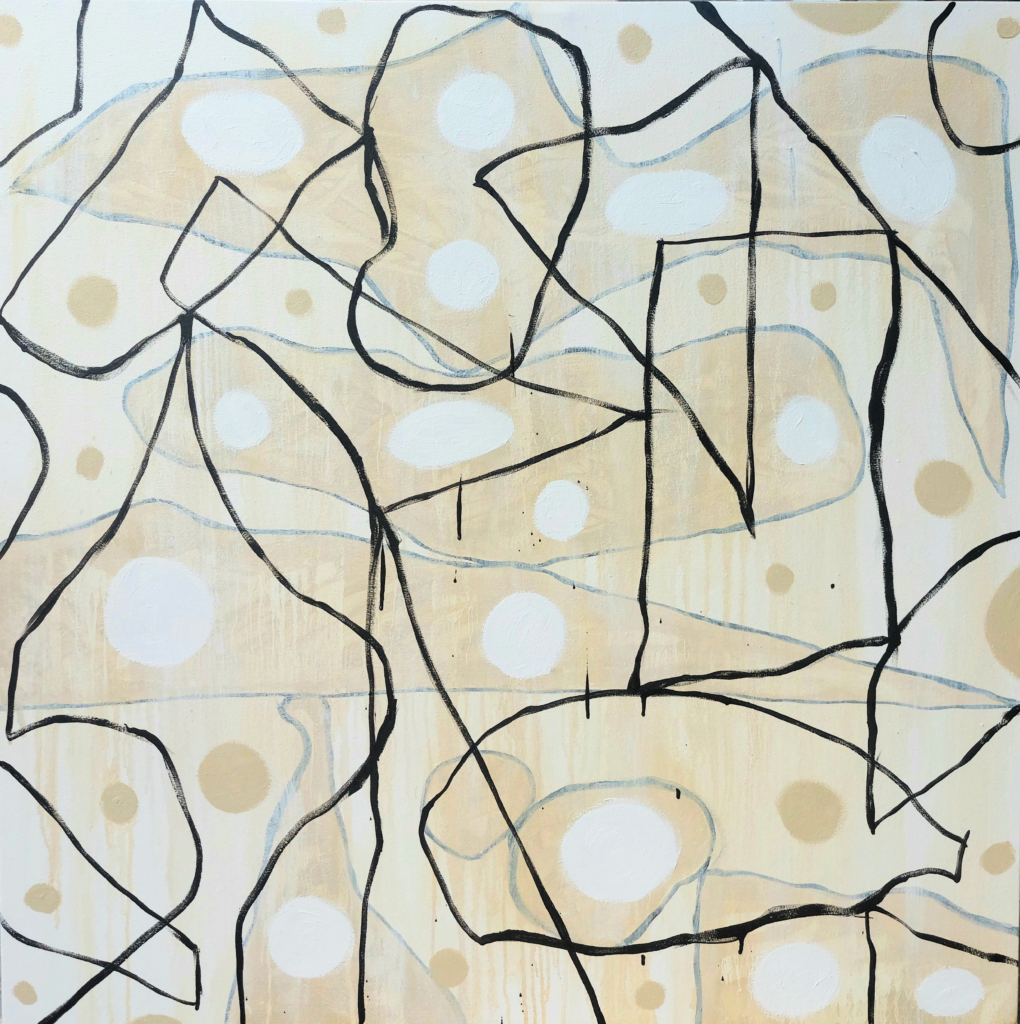
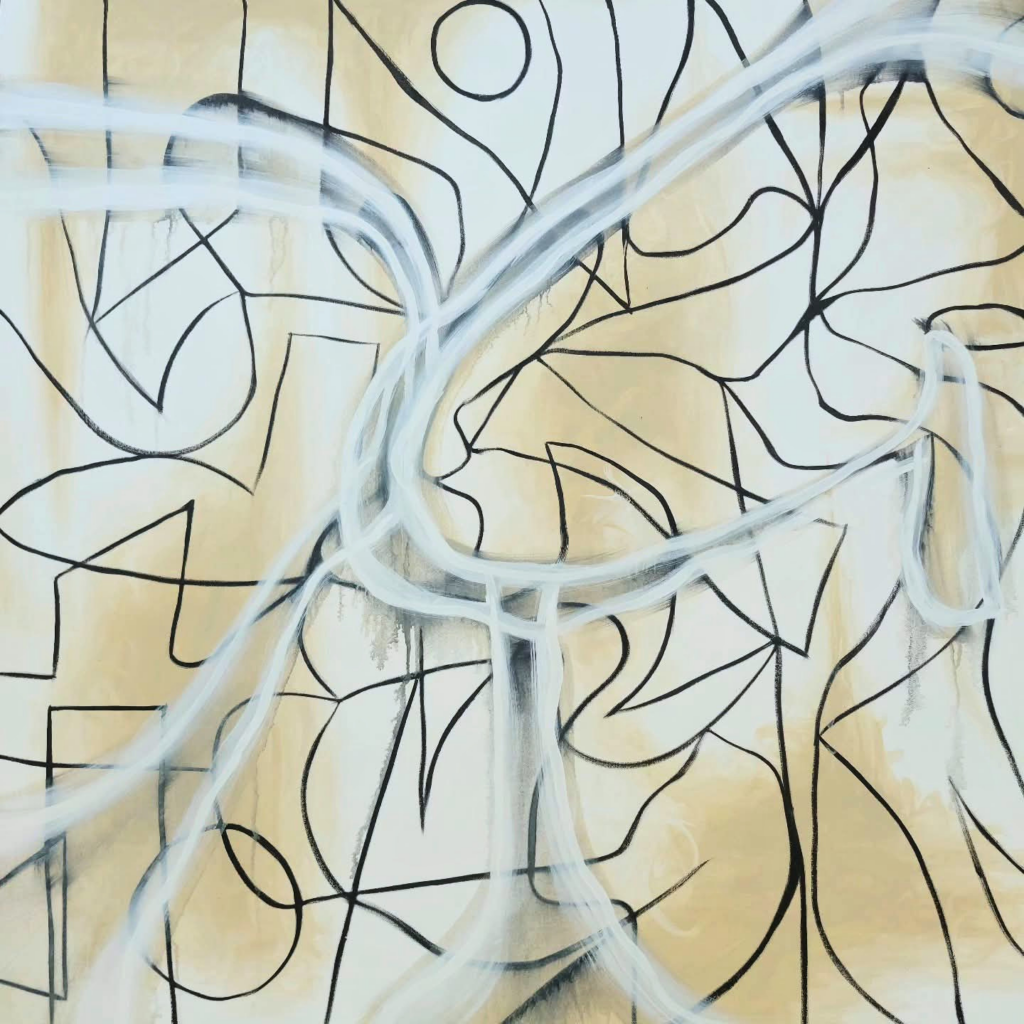
At the core of Victor Matthews contemporary art lies an exploration of line as a form of consciousness. Each stroke unfolds like a stream of thought. Often, Matthews applies his lines directly to linen without preliminary sketches or stencils. In fact, he has described starting his paintings with charcoal drawings laid down in one continuous movement. He does not lift the charcoal until each thought is complete.
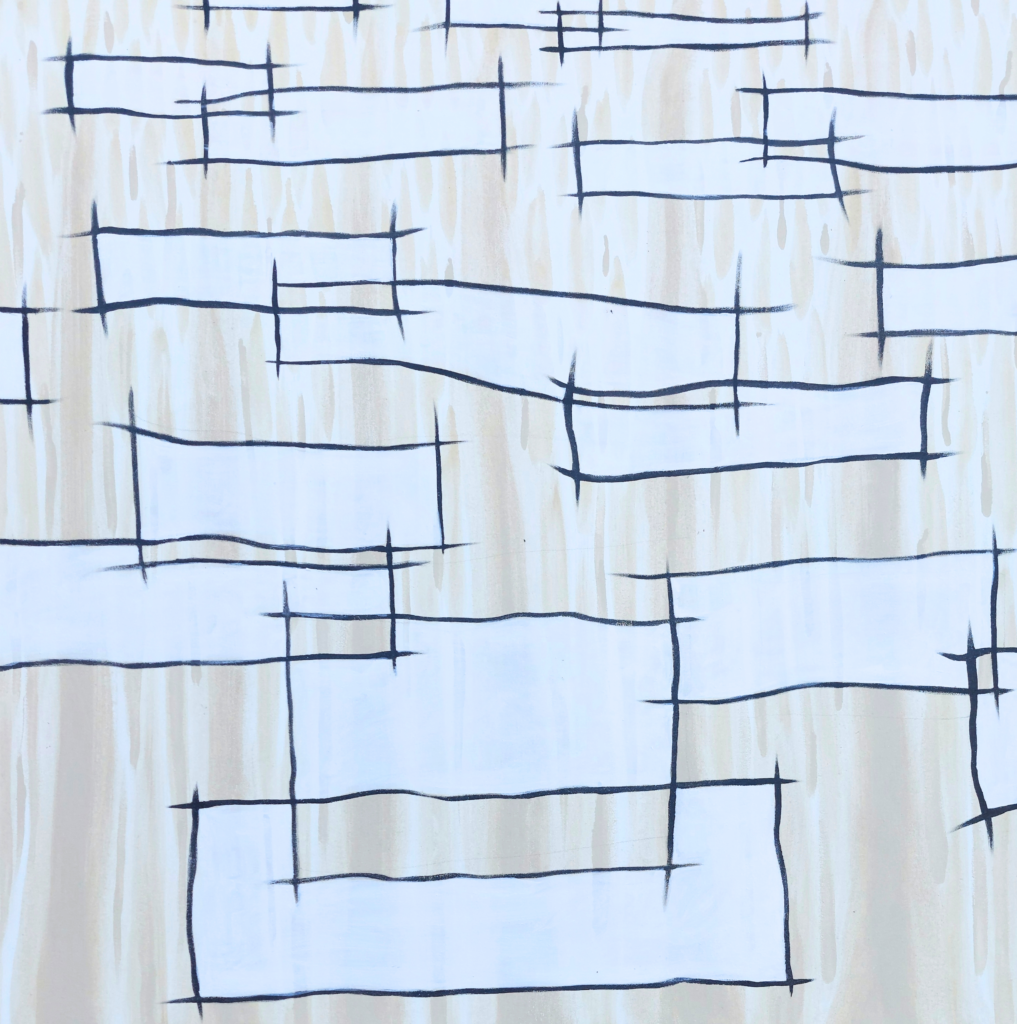
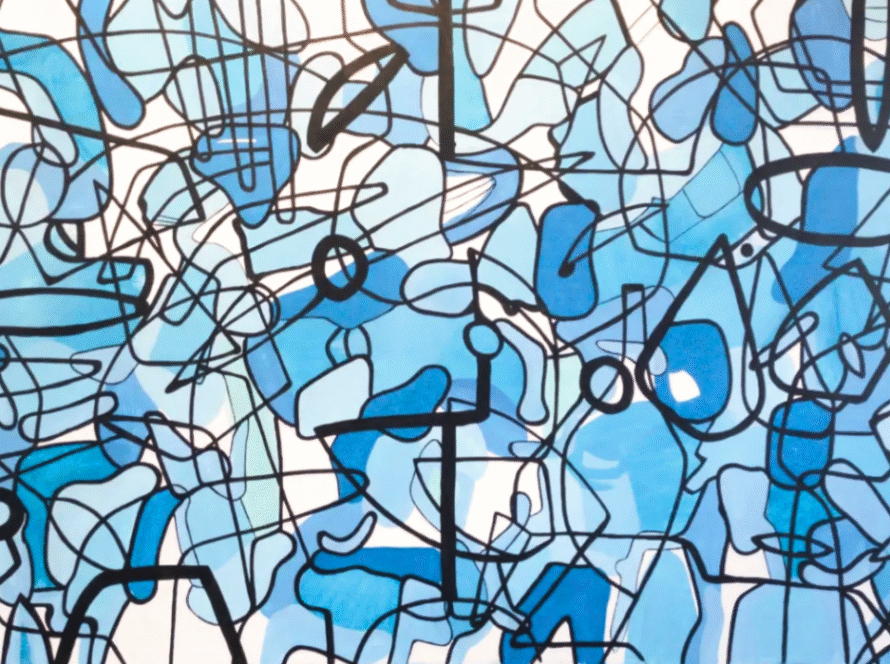
Working primarily in mixed media, Matthews combines painting, drawing, and collage. Together, these elements create layered compositions filled with energy and meditative quiet. Fluid geometric motifs and textured surfaces appear in whites, sands, and earthy neutrals. As a result, the works suggest a tension between chaos and order. They also explore the balance between intuition and discipline.
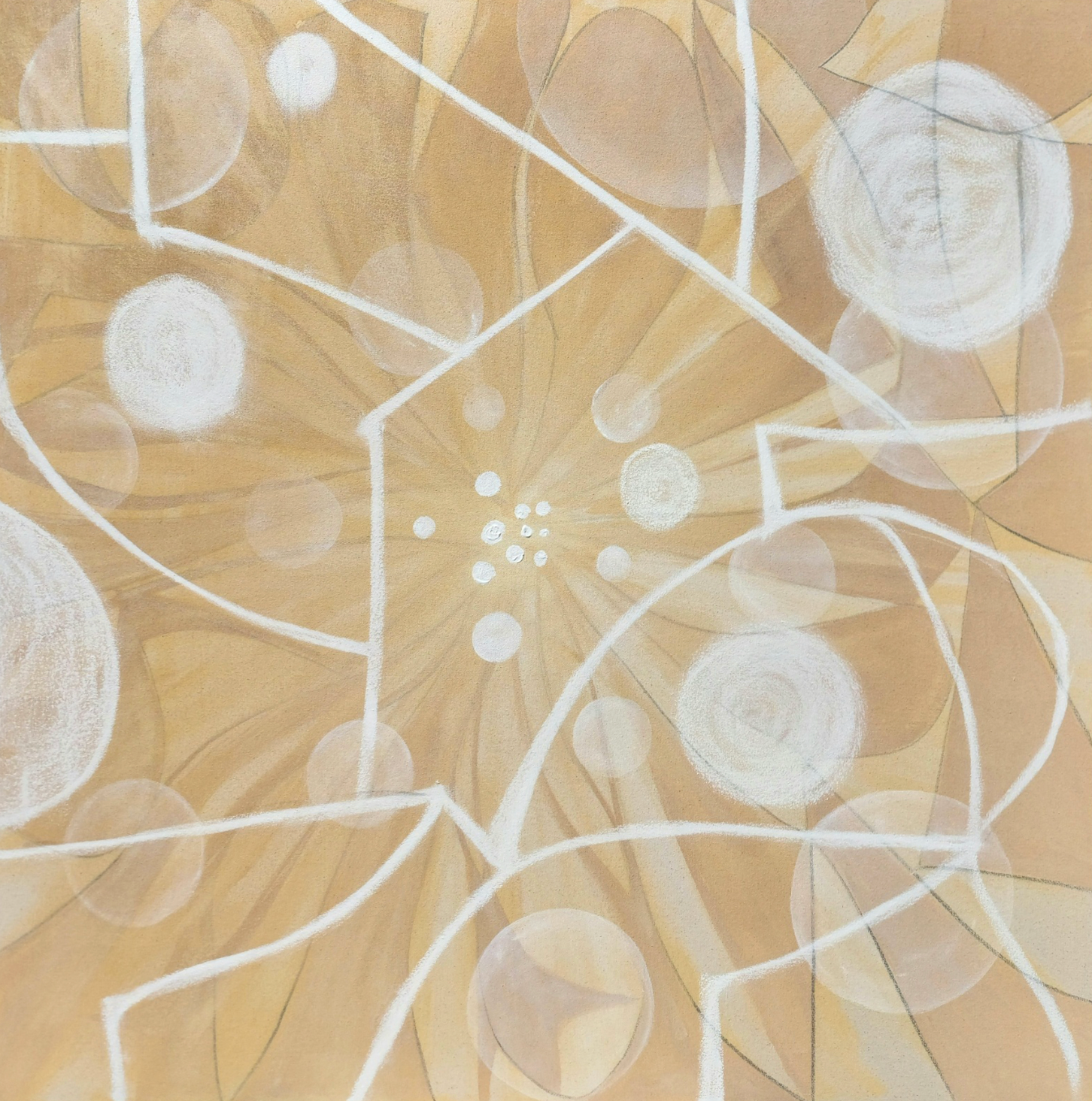
More recently, Matthews has explored these ideas in series such as “The Light of Sand.” Here, he imagines how grains of sand might “speak” when light reflects on them. Through this exploration, he translates that invisible shimmer into a hieroglyphic dance of rhythm and movement.
The Island, The City, and Inner Landscapes
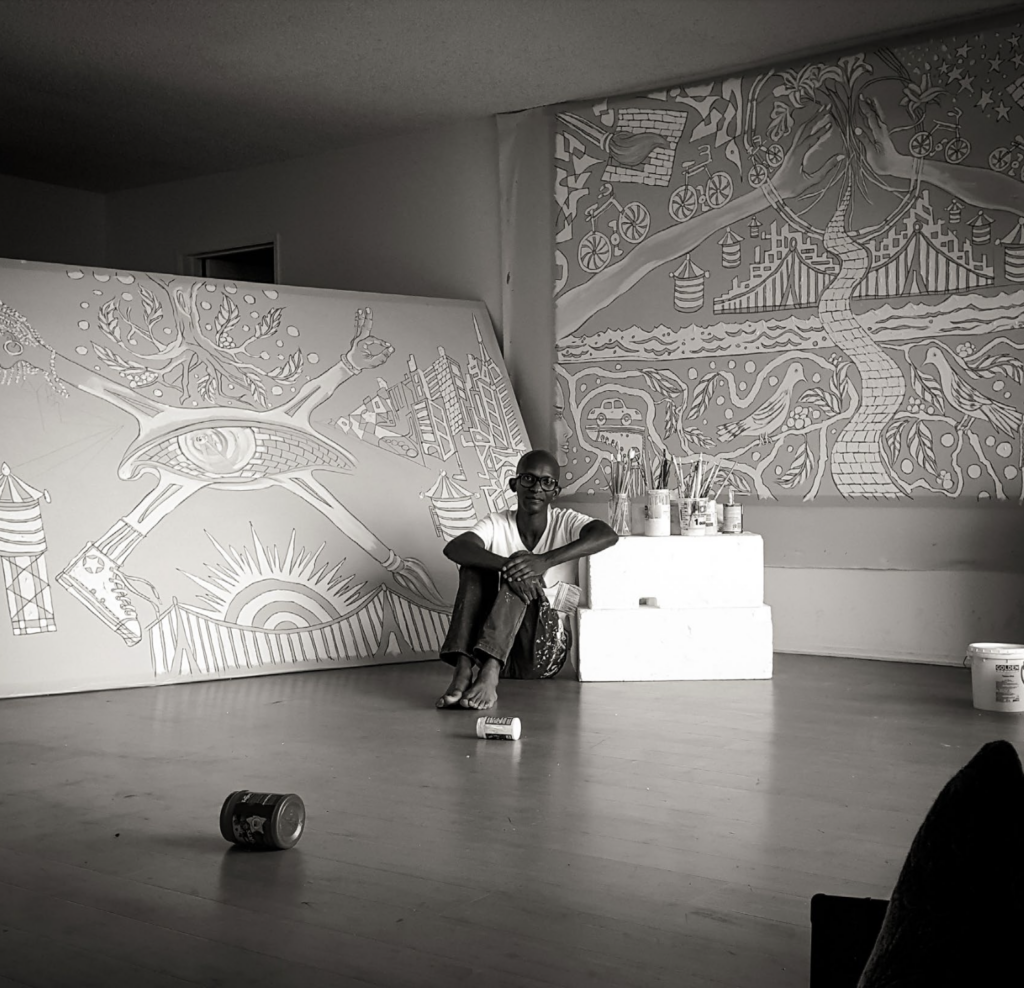
Although deeply rooted in abstraction, Victor Matthews contemporary art carries narrative traces of New York City and Saint Barthélemy. Earlier works draw on familiar New York icons, including sneakers, pigeons, bridges, and water towers. Matthews transforms these subjects into symbolic fragments of memory and place. His lines loop around the forms until they resemble remembered impressions rather than literal scenes.
In more recent years, the island of Saint Barthélemy has served as both studio and muse. Matthews has spent extended periods working there. During that time, he has responded to the island’s blinding sunlight, pale sand, and shifting tides.
Consequently, “The Light of Sand” features a restrained palette of ivory, cream, sand, and bone. These tones reflect the environment and its distinctive luminosity. Across the canvases, black contours soften into continuous, looping lines. They move with a gentle confidence through open fields of pigment.
Ultimately, the paintings resist easy closure. Rather than being read like texts, they invite viewers into meditative spaces. Within them, line and tone pulse quietly.
A Career Between Studio, Street, and Venice
Matthews’s career spans several decades, moving between studio practice, murals, and international exhibitions. Notably, he has been invited to show his work at both the 48th and 55th editions of the Venice Biennale. These appearances underscore the global reach of his visual language.
His public projects also include a mural at the Los Angeles Lakers’ training facility. The commission reconnects Matthews to his street art roots while operating on an architectural scale.
Beyond these highlights, Victor Matthews contemporary art has appeared in exhibitions across the United States and Europe. Locations include New York, Los Angeles, Chicago, Luxembourg, Rome, Amsterdam, Cologne, and Saint Barthélemy. Throughout his career, Matthews has continued to explore the intersection of memory, environment, and awareness. In doing so, he approaches drawing as meditation. Painting, meanwhile, becomes a search for balance between the visible and the unseen.
Collections, Exhibitions, and Global Recognition
Matthews’s work belongs to major museum, institutional, and private collections. Selected collections include the Los Angeles County Museum of Art and the Boca Raton Museum of Art. His work is also represented at Museum Ludwig in Cologne and Museum Overholland in Amsterdam. Other collections include Sala 1 Centro Internazionale d’Arte Contemporanea in Rome, The New School, Cornell University, the Mellon Foundation, and the Warner Foundation.
In addition, Victor Matthews contemporary art has attracted a devoted roster of collectors. Among his patrons are music figure Jay-Z, author Salman Rushdie, and actors such as Forest Whitaker and Ellen DeGeneres. Fellow artists Brice and Helen Marden are also among his collectors.
Across these varied contexts, Matthews’s work continues to trace a line between chaos and serenity. His paintings appear in museums, galleries, private homes, and public spaces. Ultimately, the work echoes his belief in an inner feeling of peace that connects all living things.
The Collection